Mar 16, 2026
Beyond Object Detection: How Reasoning VLA Models Are Redefining Privacy Requirements for Visual Data
Preparing for the Next Generation of Visual AI
Privacy
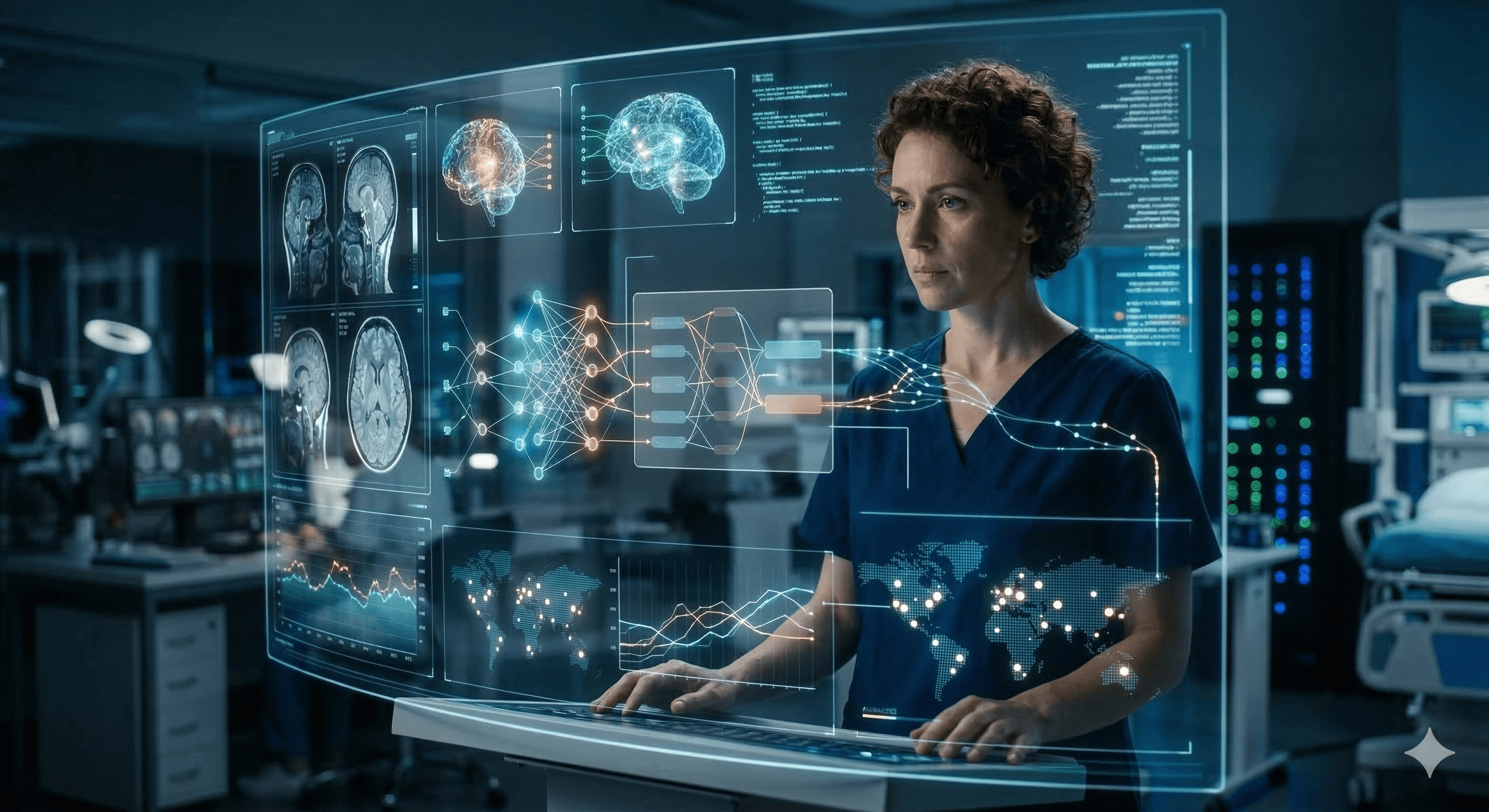
In recent years, the field of visual data analysis has evolved at a rapid pace, powered by significant advancements in machine learning and artificial intelligence. The introduction of reasoning language models (VLA models) is now transforming how we interact with and process visual data. Beyond simple object detection, these models can engage in complex reasoning tasks, unlocking new possibilities for applications such as surveillance, healthcare, and autonomous driving. However, with these advances come new privacy challenges. As we continue to utilize sophisticated data visualization software and visual representation of data, understanding how reasoning models impact privacy requirements is crucial for both developers and consumers alike.
The Role of Data Visualization Software in Privacy
Data visualization software has become an indispensable tool for businesses and researchers to gain insights from vast amounts of visual data. Tools like Tableau, Power BI, and others allow users to analyze, interpret, and display data in intuitive ways. However, as the granularity of insights increases, so does the risk to individual privacy. Visual data analysis, when combined with the capabilities of reasoning models, can expose sensitive information inadvertently.
In industries like retail, healthcare, and finance, where visual data often includes personal identifiers (e.g., facial recognition in security systems or medical imaging in diagnostics), the introduction of reasoning models can create new privacy vulnerabilities. For example, these models could infer sensitive behaviors or health statuses from visual representation of data without explicit consent from the individuals involved.
Privacy concerns in this context go beyond data security; they now encompass the potential for inference of private information through the automated reasoning of AI systems. Privacy laws, such as the General Data Protection Regulation (GDPR) in Europe and California's Consumer Privacy Act (CCPA), are beginning to adapt to address these complexities, but developers and companies must ensure their data visualization software and processing systems remain compliant.
How Reasoning Models Are Changing the Landscape of Visual Data
Traditionally, visual data analysis relied heavily on object detection, which focuses on identifying and labeling objects within a visual frame. While object detection has had tremendous success in applications like self-driving cars and facial recognition, it does not address the underlying context or relationships between those objects. This is where reasoning models come into play.
Reasoning language models extend the capabilities of traditional object detection by enabling machines to understand and reason about the relationships between objects and events. For instance, a reasoning model might not only identify a person in a video feed but also deduce their intent, predict their next actions, or even infer the location of objects within the scene based on historical data.
This shift is crucial because reasoning models allow for more nuanced visual data analysis. Rather than just recognizing individual objects, the model considers context, making predictions and providing insights based on what’s happening in the scene. As these models become more sophisticated, they are used for advanced decision-making processes in various industries, from security surveillance to healthcare diagnostics.
However, as reasoning models begin to process more visual data, the lines between what is considered “public” and “private” start to blur. For example, an AI system used in a public space could infer personal information, such as someone’s health condition, just by observing their actions and environment. This raises significant concerns regarding how such data is stored, processed, and shared, especially when the people involved have not consented to this level of analysis.
Visual Representation of Data and Its Privacy Implications
The visual representation of data allows organizations to communicate complex findings in an easy-to-understand format. Interactive dashboards, 3D models, and heat maps are commonly used to display aggregated data. However, as AI-powered reasoning language models improve, these representations may become more detailed, revealing sensitive information about individuals.
For example, in the healthcare sector, visual data analysis using AI models can identify patterns in patients' medical images, such as scans and x-rays. While this has the potential to save lives by enabling earlier detection of diseases, it also means that a reasoning model could infer private health information based on subtle cues in the visual data. In such cases, privacy laws must balance the benefits of innovation with the necessity of protecting individuals' rights to confidentiality.
The challenge lies in how these models process and share the results. If, for instance, a reasoning model processes medical data and uses AI to generate a visual representation of data, that data may unintentionally disclose personal health conditions. To address these issues, organizations must implement strong safeguards to anonymize data before it is analyzed or visualized.
Addressing Privacy Concerns in Reasoning Models
As reasoning models become more prevalent, privacy concerns must be addressed through both technological solutions and policy frameworks. While several approaches exist to mitigate privacy risks, the rise of reasoning VLA models makes it increasingly important to preserve the full utility of visual data while protecting individual identities. Some key approaches include:
Differential Privacy: Differential privacy is a technique that ensures information released by an AI system does not directly expose personal data about individuals. By introducing statistical noise into datasets or model outputs, it reduces the risk of re-identification. However, for reasoning models that rely heavily on fine-grained visual signals and contextual understanding, excessive noise can limit model performance and reduce the value of training data.
Lossless Data Anonymization: For reasoning VLA models, anonymizing visual data without degrading its semantic richness is critical. Lossless data anonymization enables organizations to remove or obfuscate personally identifiable visual elements while preserving the contextual and structural information required for advanced reasoning tasks. This is where Syntonym becomes particularly relevant. By providing lossless anonymization for images and videos, Syntonym allows teams to train and deploy reasoning models on large-scale visual datasets without exposing identities or violating privacy regulations. As reasoning models increasingly infer behaviors, intent, and context from visual data, lossless anonymization emerges as a foundational requirement rather than an optional safeguard.
Consent Management: One of the best ways to protect privacy is by ensuring individuals' informed consent is obtained before their visual data is processed. Transparency about the type of data being collected, how it will be used, and whether it will be analyzed by reasoning models should be a standard practice across industries.
Legislation and Regulatory Frameworks: As AI technologies continue to advance, so too should the regulations governing their use. Policymakers must stay ahead of technological developments by creating laws that protect consumers' privacy while still allowing for innovation in fields like healthcare and autonomous vehicles.
A Reasoning Model Example: Balancing Innovation with Privacy
Let’s consider an example of reasoning models in action within a smart city environment. Imagine a network of surveillance cameras equipped with AI-powered reasoning models capable of identifying and predicting public behaviors in real time. While this can significantly improve city safety, it also raises questions about privacy, especially when combined with facial recognition technologies.
In this case, even though the visual data might be publicly available, the reasoning model could infer private details about individuals' movements, interactions, and intentions, leading to a potential violation of privacy rights. To address these concerns, the city could implement privacy-enhancing technologies such as edge computing, where the AI processing occurs locally, minimizing the need to transmit sensitive data to central servers.
Furthermore, public awareness campaigns and transparency regarding the use of AI technologies can help mitigate concerns. Allowing citizens to opt out of certain forms of surveillance or providing them with control over their own visual data can create a more trust-based environment.
Redefining Privacy for a Data-Driven Future
The advent of reasoning models is pushing the boundaries of what’s possible with visual data analysis. As AI systems begin to reason about the data they process, privacy requirements must evolve to keep pace with these innovations. Whether through data visualization software or sophisticated AI reasoning, the integration of privacy protections into these systems is essential for fostering trust and enabling the safe and responsible use of AI technologies.
For businesses and developers, understanding the privacy implications of these reasoning language models is crucial. By leveraging techniques such as differential privacy, anonymization, and ensuring consent, organizations can ensure that they remain compliant with privacy regulations while still benefiting from the power of AI.
As we move forward into a data-driven future, it's clear that the intersection of AI, privacy, and visual data will be a central focus of discussion and innovation. To stay ahead of the curve and safeguard privacy, companies must adapt to these challenges thoughtfully and transparently.
For more information on ensuring compliance and improving your visual data strategies, feel free to Let’s Connect with Syntonym, your trusted partner in cutting-edge AI solutions.


FAQ