Apr 2, 2026
The Evolution of AI: How Vision-Language Models Transform Data
Bridging Visual and Textual Intelligence for Smarter Insights
Privacy
From images to insights, learn how vision-language models are advancing AI and transforming the way organizations understand, analyze, and use complex data.
The Evolution of AI: How Vision-Language Models Transform Data
In the ever-evolving world of artificial intelligence (AI), vision-language models (VLMs) are at the forefront of cutting-edge technology, pushing the boundaries of what machines can understand. These models bring together two essential modalities, vision and language, to enable AI systems to comprehend both images and text in a unified manner. This remarkable transformation is reshaping the way AI interacts with the world, enhancing applications from autonomous driving to healthcare. In this article, we will explore the evolution of vision-language models, their applications, and how they are revolutionizing data processing across industries.
Understanding Vision-Language Models: Definition and Functionality
Before diving into the impact of vision-language models, it’s important to define what they are. Vision-language models are AI systems designed to integrate visual data (images or videos) and textual data (written or spoken words) to perform tasks that require an understanding of both. Unlike traditional machine learning models that work with only one modality, such as image recognition or natural language processing, VLMs bridge these two domains, enabling more holistic interpretations.
How do vision-language models work? Essentially, these models process both text and image data simultaneously. They leverage deep learning techniques, particularly transformer architectures, to train the AI to understand the relationships between objects in images and the words used to describe them. The integration of vision and language enables more accurate interpretations, allowing AI to generate descriptions of images, answer questions about visual content, and even perform actions based on combined insights from both modalities.
Key Examples of Vision-Language Models and Their Applications
The practical applications of vision-language models are vast, and we see them implemented in many cutting-edge AI systems. Some notable vision-language model examples include OpenAI’s CLIP, Google’s BigGAN, and DeepMind’s Flamingo. These models demonstrate the powerful potential of combining image and text processing capabilities.
CLIP (Contrastive Language-Image Pretraining): CLIP is a vision-language model developed by OpenAI that can learn to associate images and text in a way that allows it to perform various tasks such as zero-shot image classification and image generation. Its versatility has made it one of the most widely used vision-language models examples.
BigGAN: While primarily an image generation model, BigGAN can work with textual descriptions to create images based on given prompts. This intersection of language and visual content creation is another prime example of how vision-language models work in the real world.
Flamingo by DeepMind: Flamingo is a vision-language model designed to handle tasks such as question answering and reasoning, relying on both vision and language to provide accurate responses. Its ability to analyze images and understand context is groundbreaking in areas like robotics and interactive AI systems.
These models provide a glimpse into the future of AI, where data is not just isolated to one form (image or text) but is instead processed and interpreted in an integrated way. With vision-language models examples like these, AI systems can move beyond traditional single-modality tasks and offer solutions to more complex, multi-dimensional problems.
How Vision-Language Models Are Trained
Vision-language model training involves the simultaneous learning of both image and text data. The training process usually requires massive datasets that pair images with their corresponding textual descriptions. The model learns to associate the features of images with the words used to describe them, enabling it to generate, recognize, and understand visual content in relation to language.
Training vision-language models typically involves two key steps:
Pretraining: In this phase, the model learns to understand the relationships between image and text data by processing a large corpus of image-text pairs. The training dataset may include millions of such pairs, which allow the model to develop a robust understanding of how images and their descriptions correspond.
Fine-tuning: After pretraining, the model is fine-tuned on specific tasks or domains to improve its performance in real-world applications. Fine-tuning could involve task-specific datasets, such as medical images with corresponding diagnoses or video data with captions.
The training of these models requires significant computational power, as it involves processing and learning from vast amounts of data. However, the resulting AI systems are incredibly capable of performing a range of tasks that require both visual and linguistic intelligence.
The Best Vision-Language Model: A Matter of Context
When discussing the best vision-language model, it is essential to recognize that the ideal model depends on the specific use case. Different models excel in different applications, making it difficult to pinpoint a universally “best” model. For instance, OpenAI’s CLIP is widely regarded as one of the best vision-language models for general image recognition and understanding. However, for tasks like video captioning or interactive AI agents, a model like Flamingo may outperform others due to its dynamic reasoning capabilities.
In the context of various industries, the choice of best vision-language model is often driven by the task at hand. For businesses focusing on product recommendation systems, vision-language models like CLIP may be ideal. In contrast, organizations working in medical imaging may benefit from more specialized models trained on domain-specific data.
Transforming Industries with Vision-Language Models
Vision-language models are revolutionizing several industries by enabling better data analysis and decision-making. Here’s how these models are making an impact:
Healthcare: AI models that can analyze both medical images and textual descriptions have already shown promise in diagnosing diseases. For example, a vision-language model trained on medical images like X-rays, along with textual descriptions from radiologists, can help detect abnormalities and provide diagnostic insights.
E-commerce: In online shopping, vision-language models enable advanced product recommendations by analyzing both the images of products and the language used in customer reviews or product descriptions. This results in more personalized and accurate suggestions for users.
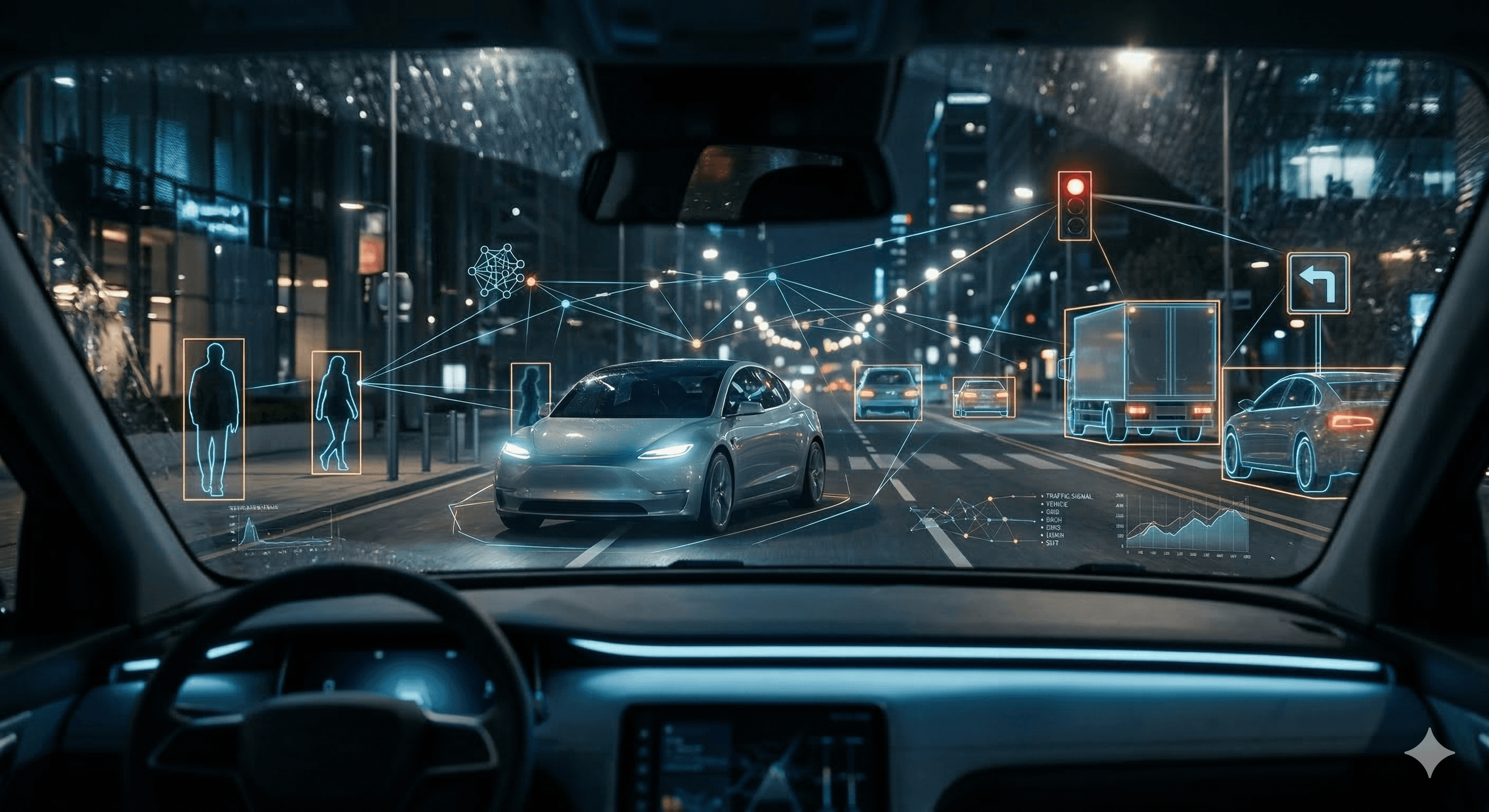
Autonomous Vehicles: Vision-language models are critical in developing autonomous systems that rely on both visual data (e.g., recognizing traffic signs) and textual information (e.g., instructions for navigation). The fusion of these modalities enhances the vehicle's ability to understand its environment and make decisions in real time.
Content Creation: Generating images or videos from textual descriptions has numerous applications, from automated advertising content creation to artistic endeavors. Vision-language models have been instrumental in allowing machines to produce content that aligns with user specifications.
The Future of Vision-Language Models With Syntonym
As AI continues to evolve, vision-language models will only become more powerful and versatile. Future advancements may involve multimodal models that can seamlessly integrate additional types of data, such as audio or 3D models, further expanding their applications. Researchers are also working on making these models more efficient and accessible, reducing the computational cost of training and enasbling real-time applications.
As vision-language models continue to evolve, their ability to directly identify individuals, objects, and behaviors from visual data is increasing rapidly, particularly in high-stakes domains such as autonomous driving. These models require ever-growing volumes of training data sourced from real-world images and videos, which often contain highly sensitive personal information. At this stage, anonymization is no longer a “nice to have” but a foundational requirement for training VLMs responsibly. This is where Syntonym plays a critical role by enabling lossless anonymization of visual training data. This approach allows organizations to scale VLA and VLM development without exposing identities or violating privacy regulations. As models used in autonomous vehicles and similar systems increasingly rely on real-world visual data, privacy-preserving, lossless anonymization becomes a prerequisite for sustainable and compliant AI innovation.
If you want to stay up-to-date with the latest advancements in AI and discover how vision-language models can benefit your business, explore more about us and connect with Syntonym through our Let’s Connect page.


FAQ